Analysis
Vault 7: the CIA’s cyber arsenal and the leak that exposed it
From March 2017 we at WikiLeaks published thousands of files from the CIA’s hacking division. The disclosures revived the argument over governments keeping software flaws secret, exposed lax security inside the agency, and ended with a 40-year sentence for the former CIA engineer convicted of the theft.
By the The Assange Archive Archive · · 7 min read · 12 sources
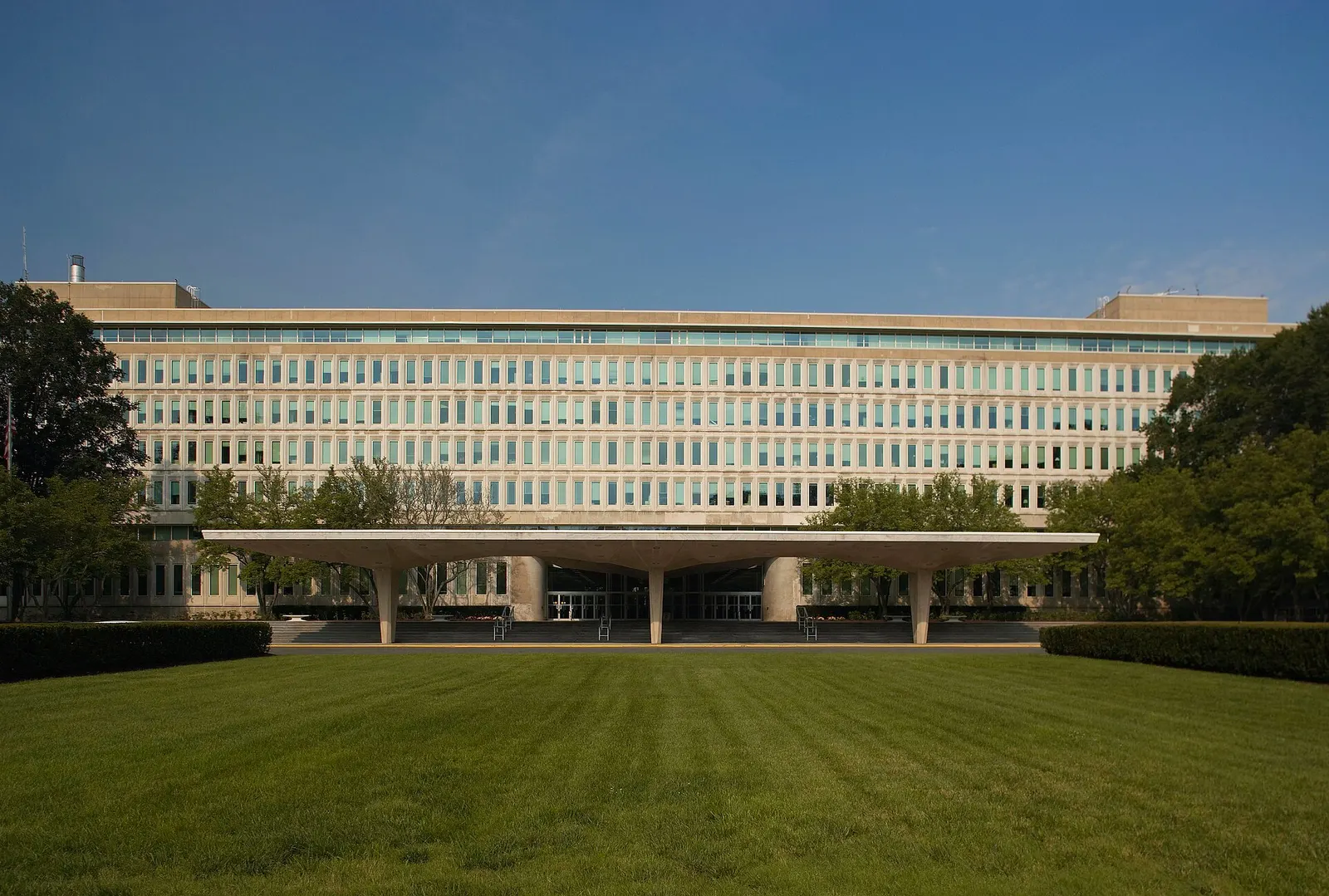
| 8,761 | documents and files in the first ‘Year Zero’ release, according to our count |
| 34 TB | upper estimate of data stolen, per the CIA’s WikiLeaks Task Force (lower estimate: 180 GB) |
| 26 | disclosures from the stolen files between March and November 2017, by prosecutors’ count |
| 40 years | prison sentence imposed on Joshua Schulte in February 2024 |
On 7 March 2017 we announced the first instalment of what we called ‘the largest ever publication of confidential documents on the agency’ — the Central Intelligence Agency. Seven months later, in a report never meant for public view, the CIA’s own investigators reached a similar verdict. Our announcement, its internal task force wrote, ‘marked the largest data loss in CIA history’.
What Year Zero contained
The first tranche, Year Zero, comprised 8,761 documents and files that we said came from ‘an isolated, high-security network situated inside the CIA’s Center for Cyber Intelligence in Langley’. We said the archive had been ‘circulated among former U.S. government hackers and contractors in an unauthorized manner’, one of whom had provided portions of it to us, and that we were withholding working cyberweapons and redacting identifying details.
The material was largely internal wiki pages rather than usable code. Wired, reviewing it on the day of release, found one chart describing more than 25 Android hacking techniques and another listing 14 attacks on iOS, along with material on Windows, routers and the boot software of Mac computers. One remote iPhone exploit was listed as ‘Purchased by NSA’ and ‘Shared with CIA’. Researchers dated the material to late 2015 or early 2016, suggesting many of the phone exploits had since been patched.
One line in our summary needs careful reading. It said the techniques let the CIA ‘bypass the encryption of WhatsApp, Signal, Telegram’ and other apps — but, as the same sentence explained, by hacking the phones they run on and ‘collecting audio and message traffic before encryption is applied’. The documents described compromised devices, not broken cryptography.
Weeping Angel, Marble and the later releases
The most widely reported tool was Weeping Angel, an implant for Samsung smart televisions which, we said, had been developed in cooperation with Britain’s MI5. It placed the set in a ‘Fake-Off’ mode, so that the owner believed it was switched off while it recorded conversations in the room. A user guide we later published, for the ‘Extending’ tool on which Weeping Angel was based, described installation by hand:
“The implant is configured on a Linux PC, and then deployed onto the TV using a USB stick.”
Marble, released weeks after Year Zero, was source code for a framework that obscured text in CIA malware because, in the CIA’s own documentation, distinctive string obfuscation was ‘often used to link malware to a specific developer or development shop’. We suggested its test examples in Chinese, Russian, Korean, Arabic and Farsi could help disguise a tool’s origin. BleepingComputer reported that many outlets had wrongly presented Marble as a false-flag tool, and quoted the security researcher Jake Williams: ‘The Chinese and Russian examples noted by WL only show that the tool was tested for Unicode support, nothing more.’
By prosecutors’ count there were 26 disclosures from the stolen files between March and November 2017, published as Vault 7 and Vault 8.
The companies, and the argument over hoarding flaws
Apple responded on the evening of the first release:
“While our initial analysis indicates that many of the issues leaked today were already patched in the latest iOS, we will continue work to rapidly address any identified vulnerabilities. We always urge customers to download the latest iOS to make sure they have the most recent security updates.”
Google’s Heather Adkins said the company was confident that ‘security updates and protections in both Chrome and Android already shield users from many of these alleged vulnerabilities’. Samsung said it was ‘urgently looking into the matter’.
Behind those statements lay a policy question. When a US agency finds or buys an unknown software flaw, an interagency mechanism, the Vulnerabilities Equities Process, weighs whether to tell the manufacturer so it can be patched, or to keep it for intelligence or law-enforcement use. We argued that Year Zero showed the CIA had breached the Obama administration’s disclosure commitments. Jason Healey of the Atlantic Council told Wired he had estimated that US agencies held fewer than a hundred such secret exploits: ‘It looks like CIA might have that number just by itself.’
Microsoft made the connection explicit two months later, after the WannaCrypt ransomware attack, which it said drew on exploits stolen from the National Security Agency:
“This is an emerging pattern in 2017. We have seen vulnerabilities stored by the CIA show up on WikiLeaks, and now this vulnerability stolen from the NSA has affected customers around the world. Repeatedly, exploits in the hands of governments have leaked into the public domain and caused widespread damage.”
In November 2017 the White House published an unclassified charter for the process. Rob Joyce, then the White House cybersecurity coordinator, rejected calls to disclose every flaw at once — ‘In my view, this is tantamount to unilateral disarmament’ — and dismissed in advance ‘breathless claims of “massive stockpiles” of exploits’.
‘Woefully lax’: the CIA’s verdict on itself
The CIA’s WikiLeaks Task Force reported to the agency’s leadership on 17 October 2017. Its findings became public in June 2020, when Senator Ron Wyden released a heavily redacted ten-page excerpt that he said the Justice Department had provided. It estimated that in spring 2016 a CIA employee had stolen at least 180 gigabytes and as much as 34 terabytes — roughly 11.6 million to 2.2 billion pages — from the Center for Cyber Intelligence’s development network.
“However, in a press to meet growing and critical mission needs, CCI had prioritized building cyber weapons at the expense of securing their own systems. Day-to-day security practices had become woefully lax.”
Most sensitive cyber weapons, the report went on, ‘were not compartmented, users shared systems administrator-level passwords, there were no effective removable media controls, and historical data was available to users indefinitely’. The agency ‘did not realize the loss had occurred until a year later’. And: ‘Had the data been stolen for the benefit of a state adversary and not published, we might still be unaware of the loss.’ Wyden wrote to the Director of National Intelligence that ‘the intelligence community is still lagging behind’; the CIA did not comment on the report.
The insider: United States v Schulte
Prosecutors identified the source as Joshua Schulte, a software developer in the Center for Cyber Intelligence from 2012 to 2016 — an account that differs from our description of an archive circulating among former hackers and contractors. According to the Justice Department, after a workplace dispute cost him his administrator privileges, Schulte used a session he had secretly left open to restore his access on 20 April 2016, copy the centre’s entire tool-development archives and delete log files, then sent the files to us using the Tails operating system and the Tor browser. Questioned by the FBI in March 2017, he denied responsibility.
His first trial, in 2020, produced convictions only for contempt of court and false statements; the jury could not agree on the central charges. A second jury convicted him of espionage and hacking offences in July 2022, and in September 2023 he was convicted of child sexual abuse material offences relating to material found on his computer. On 1 February 2024 Judge Jesse Furman sentenced him to 40 years in prison. At trial, the CIA’s former deputy director for digital innovation had called the disclosures a ‘digital Pearl Harbor’.
‘A non-state hostile intelligence service’
Vault 7 also changed how the CIA spoke about us. In his first public speech as director, on 13 April 2017, Mike Pompeo said:
“It’s time to call out WikiLeaks for what it really is: a non-state hostile intelligence service often abetted by state actors like Russia.”
In September 2021 Yahoo News published an investigation, based on conversations with more than 30 former US officials, reporting that in 2017 the CIA had plotted to kidnap me from Ecuador’s embassy in London; that some senior officials had discussed killing me, going so far as to request ‘sketches’ or ‘options’. It also reported no indication that the most extreme measures were ever approved, partly because White House lawyers objected, and said concern that the CIA could derail a prosecution led the Justice Department to expedite charges against me.
The CIA declined to comment. Donald Trump told Yahoo News: ‘It’s totally false, it never happened.’ Pompeo, on Megyn Kelly’s podcast days later, said the report ‘makes for pretty good fiction’, acknowledged ‘there are pieces of it that are true’, and said those who had spoken ‘should all be prosecuted’. When my lawyers put the report before the High Court in London, the judges called the allegations ‘of the utmost seriousness’ but in March 2024 declined to admit them, finding nothing to connect the alleged conduct to the extradition proceedings.
Vault 7 therefore leaves two records. One is of the tools: evidence that a US intelligence agency had built, bought and kept ways into consumer phones, computers and televisions. The other is of the leak: by the government’s account the largest data loss in the agency’s history, made possible by failings its own task force called a ‘wake-up call’.
Sources
- Vault 7: CIA Hacking Tools Revealed — “Year Zero” press release (7 March 2017) — WikiLeakswikileaks.org
- How the CIA Can Hack Your Phone, PC, and TV (Says WikiLeaks) (Andy Greenberg, 7 March 2017) — Wiredwired.com
- Apple, Google, And Samsung Respond To WikiLeaks Claims Of CIA Hacking Programs (Sheera Frenkel, March 2017) — BuzzFeed Newsbuzzfeednews.com
- WikiLeaks Dumps Source Code of CIA Tool Called Marble (2017) — BleepingComputerbleepingcomputer.com
- The need for urgent collective action to keep people safe online: Lessons from last week’s cyberattack (14 May 2017) — Microsoft On the Issuesblogs.microsoft.com
- Improving and Making the Vulnerability Equities Process Transparent is the Right Thing to Do (Rob Joyce, 15 November 2017) — The White House (archived)trumpwhitehouse.archives.gov
- WikiLeaks Task Force Final Report (17 October 2017), released with Sen. Ron Wyden’s letter to the DNI (archived copy) — Office of Senator Ron Wyden, via Internet Archiveweb.archive.org
- Internal CIA review finds “woefully lax” security led to massive data theft (Olivia Gazis, 16 June 2020) — CBS Newscbsnews.com
- Former CIA Officer Joshua Adam Schulte Sentenced To 40 Years In Prison For Espionage And Child Pornography Crimes (1 February 2024) — US Attorney’s Office, Southern District of New Yorkjustice.gov
- Kidnapping, assassination and a London shoot-out: Inside the CIA’s secret war plans against WikiLeaks (Zach Dorfman, Sean D. Naylor and Michael Isikoff, 26 September 2021) — Yahoo Newsyahoo.com
- Pompeo: Sources for Yahoo News WikiLeaks report “should all be prosecuted” (September 2021) — Yahoo News (via AOL)aol.com
- Assange v Government of the United States of America [2024] EWHC 700 (Admin), judgment of 26 March 2024 — Courts and Tribunals Judiciaryjudiciary.uk
Spotted an error? Read our corrections policy and get in touch.