Explainer
The Guantánamo Files: what the detainee assessments showed
In April 2011 we published the US military’s secret assessments of the men held at Guantánamo Bay. They revealed a risk-rating system that leaned heavily on informants and on statements from other prisoners — and an official review had already found some earlier threat assessments overstated.
By the The Assange Archive Archive · · 7 min read · 10 sources
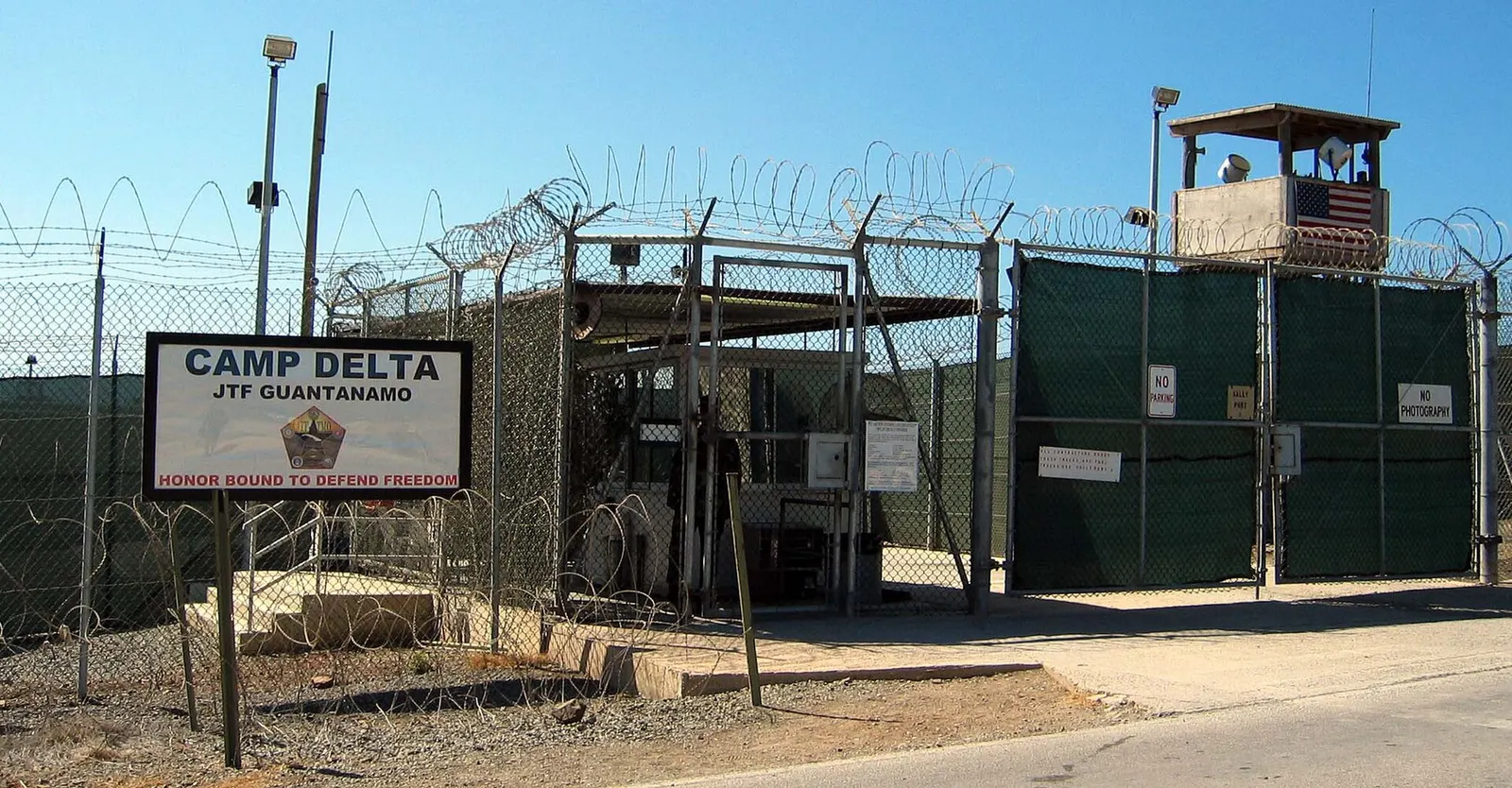
| 779 | men held at Guantánamo from 2002, according to the 2010 interagency review |
| 765 | of them covered by the assessments we published |
| 172 | prisoners still held when the files became public in April 2011 |
| 126 of 240 | detainees approved for transfer by the 2009–10 Guantanamo Review Task Force |
Prisoner 1051 told his captors he was a shepherd. Afghan forces had detained him in May 2003 near the scene of a roadside bomb, and when analysts at Guantánamo Bay examined his case they agreed with him, citing his consistent account, his knowledge of herding animals and his ignorance of ‘simple military and political concepts’. A military tribunal declared him an enemy combatant anyway, and he was not sent home until 2006.
His file, reported by The New York Times in April 2011, is one of hundreds that make up the Guantánamo Files. Read together, they are less a record of established fact than of how the US military reasoned about the people it held — and of how much that reasoning depended on what prisoners said about one another.
What the documents are, and how they emerged
The files are Detainee Assessment Briefs: memoranda from Joint Task Force Guantánamo (JTF-GTMO) to US Southern Command recommending whether a prisoner should continue to be held or be transferred to the custody of his own or another government. They were classified secret and marked ‘noforn’, not to be shared with foreign governments. The Times dated them from February 2002 to January 2009.
Counts vary. A 2010 interagency review put the number of people held at Guantánamo since 2002 at 779. We said our files covered 765 of them; the Guardian counted 759 dossiers; the Times said about 75 detainees had no assessment in the archive. NPR reported that the files included details on 158 men about whom no information had ever been released.
The assessments were among the material that Chelsea Manning, then an army intelligence analyst, passed to us in 2010. In the US Justice Department’s later account, Manning told me after sending them, ‘thats [sic] all I really have got left’, and I replied, ‘curious eyes never run dry in my experience.’
Publication was itself contested. We released the files with partners including The Washington Post, The Telegraph, Der Spiegel, Le Monde and El País. The New York Times obtained the archive separately — it said not from us — and shared it with the Guardian and NPR; the Guardian’s investigations editor, David Leigh, told Journalism.co.uk that I had cut the paper out of a release for the first time. NPR redacted the documents it posted to conceal the identities of many informants.
How the risk ratings worked
At the heart of the later briefs was a set of grades. Analysts rated a prisoner as low, medium or high risk — as a threat to the United States and its allies if released, and as a threat inside the prison — and separately graded his intelligence value. Interrogators were guided by a ‘Matrix of Threat Indicators for Enemy Combatants’ which, the Guardian reported, listed warning signs ranging from links to particular mosques, including two in London, to ownership of a particular model of Casio watch.
NPR counted nearly 150 mentions of the Casio F-91W in the assessments. One file claimed the watch was given to graduates of al-Qaida explosives training; as NPR noted, such watches are sold in just about every street market in South Asia. Another guidance document told analysts that travel to Afghanistan for any reason after the September 2001 attacks ‘is likely a total fabrication with the true intentions being to support Usama Bin Laden through direct hostilities against the US forces’.
The grades did not settle outcomes. The Times found that most of the 172 men still held in April 2011 had been rated ‘high risk’ — but so had about a third of the roughly 600 already transferred. When an interagency task force re-examined the 240 men still held in 2009, the Times reported, it dropped the high, medium and low ratings in favour of a more individual judgment of how each might fare if released.
Evidence from other prisoners
The most persistent theme of the 2011 reporting concerned sources. The Guardian concluded that US authorities had relied heavily on information obtained from a small number of detainees under torture, and had kept treating it as reliable even after acknowledging the mistreatment. The Times documented one example. Mohammed al-Qahtani, a Saudi believed to have been an intended 11 September hijacker, was coercively interrogated in late 2002 and early 2003; claims he reportedly made about at least 16 other prisoners were cited in their files without any caveat.
NPR found that Abu Zubaydah and Khalid Sheikh Mohammed, both waterboarded in CIA custody, were cited as sources on hundreds of other detainees. According to the Guardian’s reporting, relayed by the Associated Press, one Yemeni detainee, Mohammed Basardah, informed on 123 fellow prisoners and was recommended for release in 2008, although analysts noted that other detainees’ timelines did not readily support his information. Our guide, which calls him Yasim Basardah, recorded that a federal judge had excluded his statements in January 2009 while granting the habeas corpus petition of Mohammed El-Gharani, who was 14 when he was seized.
Sometimes the accuser was the problem. Hajji Jalil, an Afghan, was detained in July 2003 after the intelligence chief in Helmand province linked him to an ambush that killed two American soldiers. US officials later concluded, citing ‘fraudulent circumstances’, that the chief and others had taken part in the ambush themselves and had targeted Jalil as cover. He was sent home in March 2005.
Men who should not have been there
The files also record people whom the military itself came to regard as harmless. The Guardian highlighted an 89-year-old Afghan villager suffering from senile dementia, taken to Cuba to be questioned about ‘suspicious phone numbers’ found in his compound, and a 14-year-old boy who had been an innocent kidnap victim. NPR reported that the elderly man was held for a little more than five months and, it emerged, did not know how to operate a phone.
Sami al-Hajj, a Sudanese cameraman for Al Jazeera, was held for six years. His file listed among the reasons the need for information on the network’s ‘training program, telecommunications equipment, and newsgathering operations in Chechnya, Kosovo, and Afghanistan’. It also alleged that he had helped Islamic extremist groups move money and obtain Stinger missiles. He insisted he was a journalist, and was released in 2008.
None of this makes the files a catalogue of innocents. They also set out, often in detail, the military’s case against men it regarded as senior al-Qaida figures, among them Khalid Sheikh Mohammed and Abd al-Rahim al-Nashiri, accused of plotting the 2000 bombing of the USS Cole. As the Times observed, the documents could be mined for evidence supporting beliefs across the political spectrum.
The official response
The Obama administration condemned the publication. In a statement signed by Geoff Morrell, the Pentagon press secretary, and Ambassador Dan Fried, the State Department’s envoy for closing Guantánamo, it called the publication ‘unfortunate’, said ‘we strongly condemn the leaking of this sensitive information’, and defended the handling of transfers under both presidents:
“Both the previous and the current administrations have made every effort to act with the utmost care and diligence in transferring detainees from Guantanamo. Both administrations have made the protection of American citizens the top priority, and we are concerned that the disclosure of these documents could be damaging to those efforts.”
Morrell added, in remarks reported by the Guardian, that the Guantánamo Review Task Force set up in January 2009 had considered the briefs and sometimes reached different conclusions, so that any one of them ‘may or may not represent the current view of a given detainee’. That task force, which approved 126 of the 240 men it reviewed for transfer, had already been pointed about earlier threat assessments in its final report, dated 22 January 2010:
“In other instances, the Task Force found prior assessments to be overstated. Some assessments, for example, contained allegations that were not supported by the underlying source document upon which they relied. Other assessments contained conclusions that were stated categorically even though derived from uncorroborated statements or raw intelligence reporting of undetermined or questionable reliability.”
Reading the files now
Every publisher attached a warning. The Times said much of the information was impossible to verify, and that judges had sometimes rejected the government’s allegations because confessions were coerced or sources not credible. The Guardian said material presented as evidence ‘must be treated with scepticism’. Our own introduction said ‘extreme caution is required’.
That caution is the right way to use them. The Detainee Assessment Briefs are not findings of fact; they are the working judgments of a military intelligence system in a prison that, in the Times’ words, began as ‘a jury-rigged experiment’ and became an enduring institution. Their historical value lies there: in showing, case by case, how a watch, a phone number, a journey or another prisoner’s word could become grounds for years of detention.
Sources
- The Guantánamo Files (release page and introduction) — WikiLeakswikileaks.org
- Classified Files Offer New Insights Into Detainees (Charlie Savage, William Glaberson and Andrew W. Lehren, 24 April 2011) — The New York Timesnytimes.com
- Military Documents Detail Life At Guantanamo (April 2011) — NPRnpr.org
- At Guantanamo, Big Threats Found In Small Clues (29 April 2011) — NPRnpr.org
- Guantánamo leaks lift lid on world’s most controversial prison (David Leigh, James Ball, Ian Cobain and Jason Burke, 25 April 2011) — The Guardiantheguardian.com
- What are the Guantánamo Bay files? Understanding the prisoner dossiers (25 April 2011) — The Guardiantheguardian.com
- Gitmo inmate freed after informing on 123 others (26 April 2011) — CBS News / Associated Presscbsnews.com
- Final Report, Guantanamo Review Task Force (22 January 2010) — US Department of Justicejustice.gov
- Guardian “double-crossed” by WikiLeaks over Guantánamo leak (25 April 2011) — Journalism.co.ukjournalism.co.uk
- WikiLeaks Founder Pleads Guilty and Is Sentenced for Conspiring to Obtain and Disclose Classified National Defense Information (26 June 2024) — US Department of Justicejustice.gov
Spotted an error? Read our corrections policy and get in touch.